The Story Behind the Photo
November 2025: Exploring Washington
Steve Dorsey

©Steve Dorsey
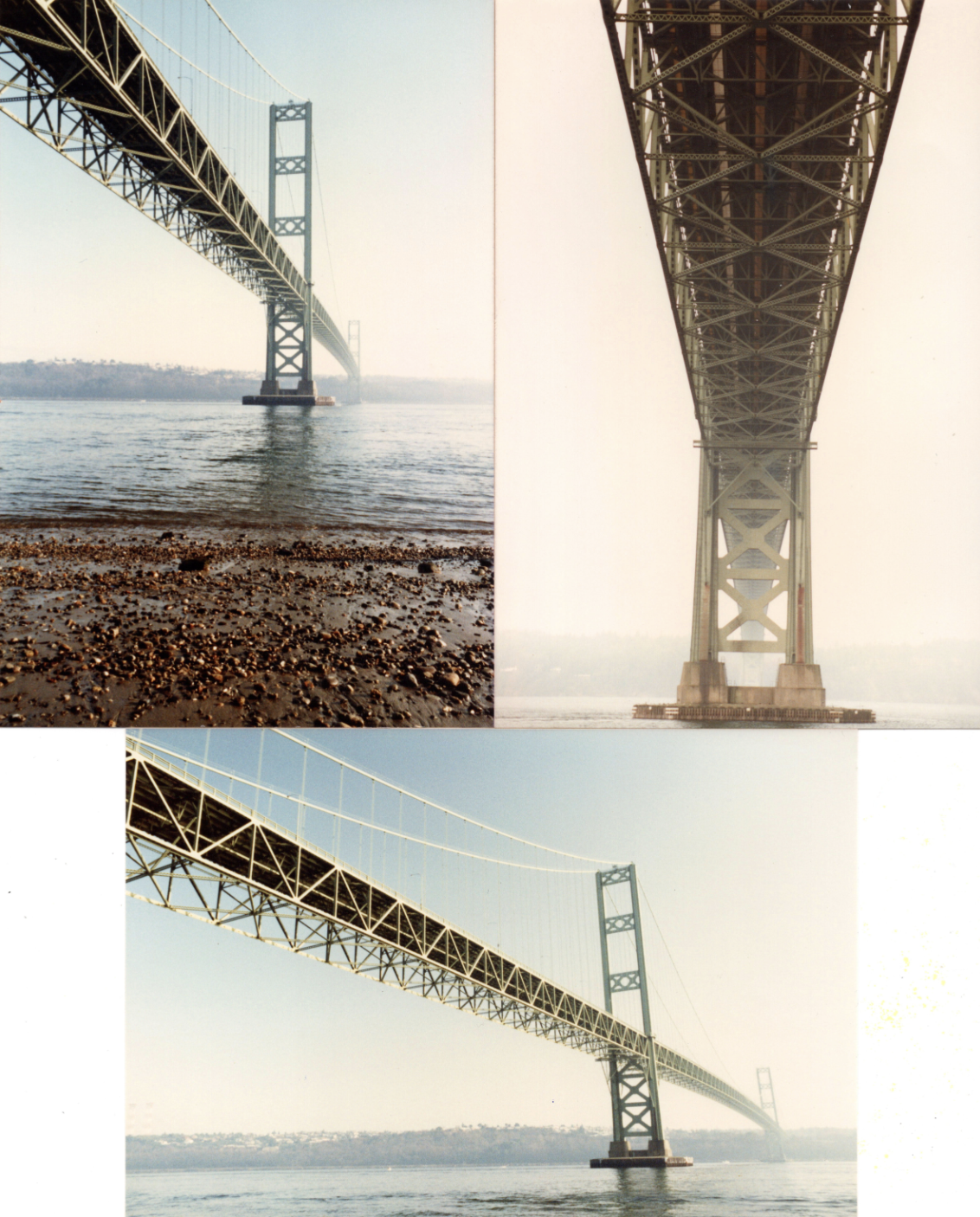
I photographed the Narrows Bridge on a foggy day 45 years ago with a Pentax K-1000 and 28mm f2.8 lens. Here are some of those shots.
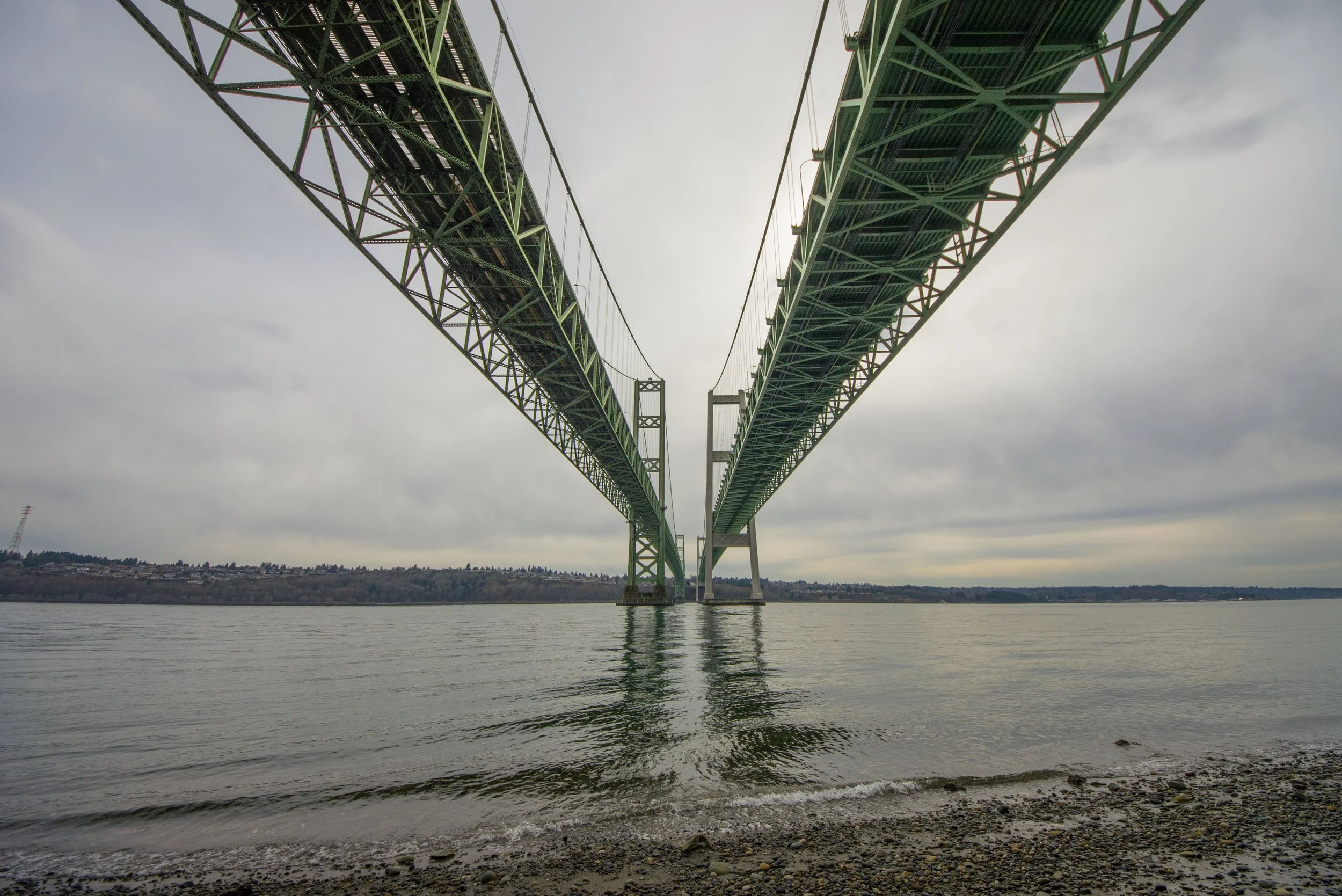
March of 2023, I went out for fun with another photographer, Bill from Gig Harbor. I suggested the bridge. We accessed the beach under the bridge from Tacoma Narrow Park located northwest of the bridge. A quarter mile hike down the beach and we were under the bridge. The flat cloudy mid-day sun did not deliver any pleasing results. Here is photo taken that gray day.
Bill, returning a week later on a sunny day, re-took some photos. With the improved lighting Bill won a significant award with his photo.
For our photo club Exploring Washington assignment, I returned November 1st this year, during evening golden hour when the clouds looked favorable. Getting a late start that day, I had to rush down the beach during high tide, climbing through downed trees on the narrow beach. I set up my tripod just as the golden hour was beginning at 4:00 pm. Recently upgrading from APSC to a full frame Pentax K-1ii camera and not having a full frame ultra-wide, I used an APSC Sigma 8-16mm. No filters. At 16mm the vignetting was minimal. Throughout golden and blue hour, I captured 140 shots from different locations and as the lighting changed. By 5:10 pm the light was gone and I hiked out as it was getting dark, wondering if the park gate closed at sunset. All good.
Make it stand out
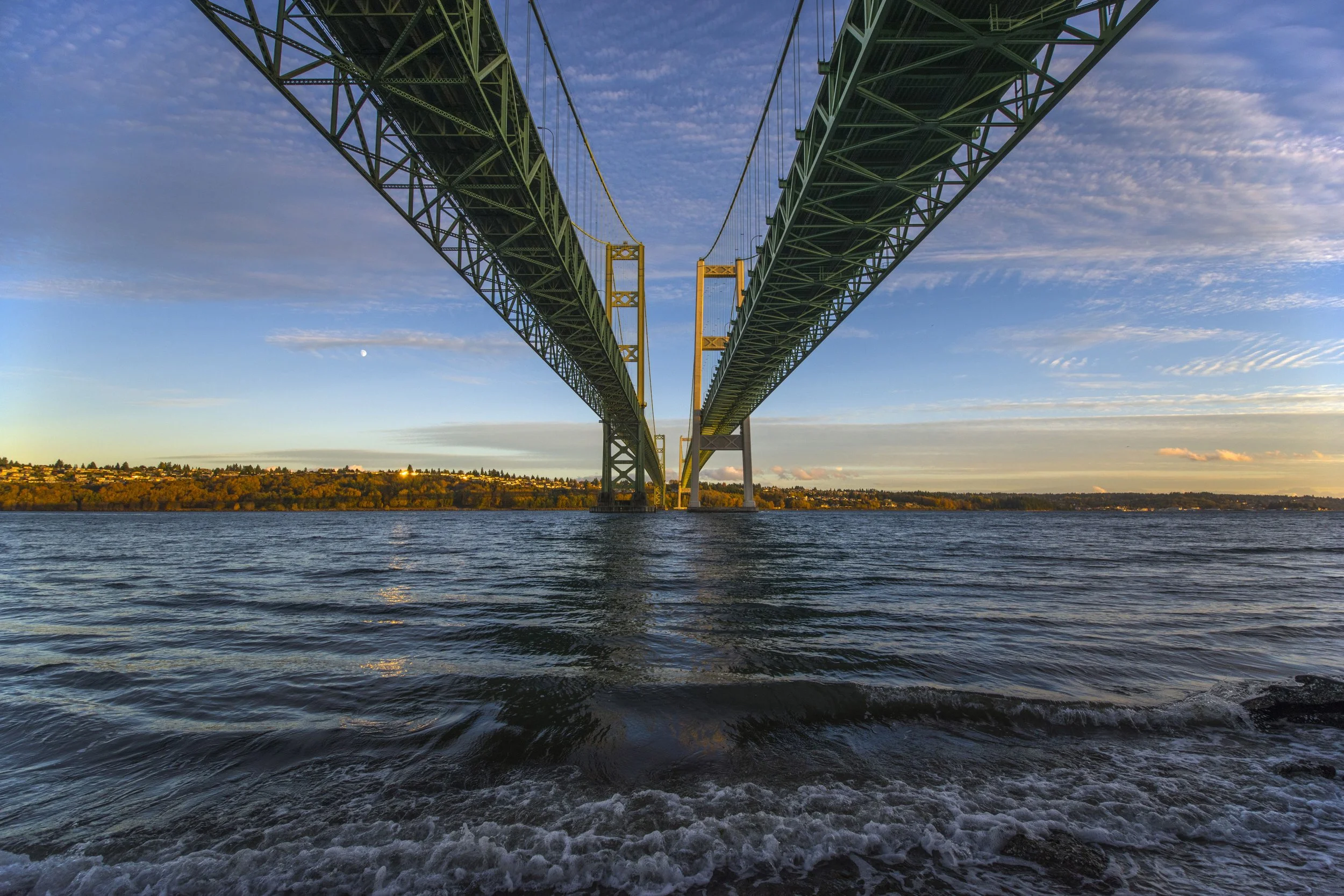
I selected this shot for its golden light. I can feel the clouds relating to the water. I felt the bridge casting a shadow across the far bank, the sun reflecting from a window, and the moon added interest without being distractions.
Camera settings: f9.5, 1/250 second, ISO 400, -1 exposure compensation, RAW format. I under expose to preserve highlights and adjust in post. Photo was processed with Photoshop Elements, no cropping, removed vignetting. I adjusted the exposure and lightened the shadows to reveal some detail under the bridge. I was careful not to lighten too much detail and make the picture look unnatural. Minimal increase in color saturation. I believe processing should be subtle and look natural.
What I learned from this is that there is no substitute for great light. When I find a promising composition, it is worth my time to return to the site under more favorable lighting. Then take time to set up the composition and keep shooting as the light changes. Golden and blue hour is often great light. It is difficult for me to get up early and be in place for the light. Well worth it to do so. I have found great light mid-day too when filtered by clouds, fog, or trees. I look for lighting that surprises me.