The Story Behind the Photo
May 2026: Macro-Bugs
Steve Dorsey
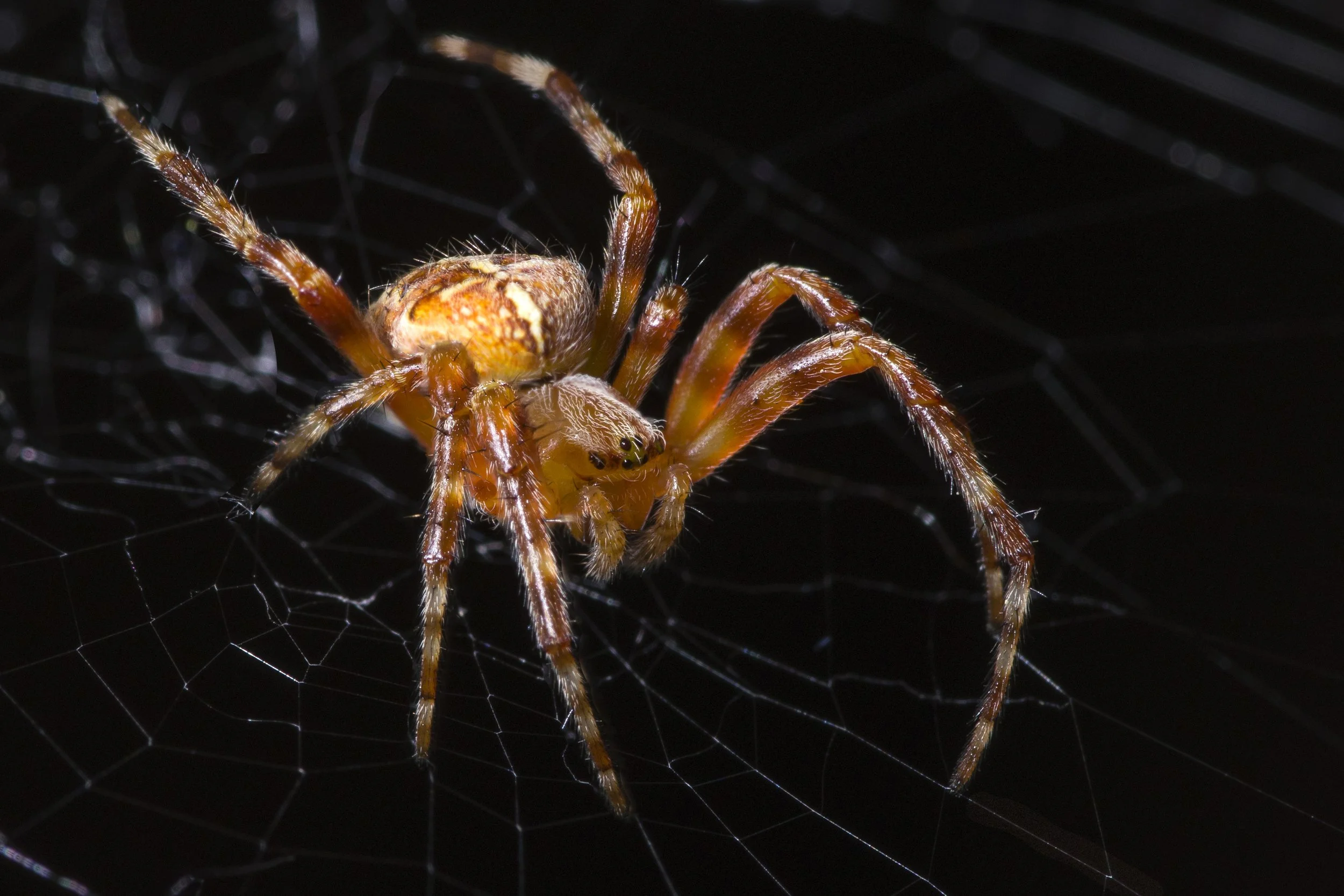
100mm, f/13, 1/200 sec, ISO 200, strobe flash with modifier.
I had only dabbled in macro photography, so for May’s macro assignment I needed to learn how to do this. I took 1600 shots in 6 days of practicing and watched several YouTube macro photo videos. The first challenge was to find subjects this early in the year.
First bees on the rhododendron blossoms. Busy bees make focusing and composing a challenge. I shot a lot of frames to get a few in focus. When they slow down their butt is sticking out of a flower. To make compelling photos I want to capture them at eye level. Looking down on their backside was not emotionally connecting the viewer with the subject.
I used a 100mm, f2.8, 1:1 macro lens on a full frame Pentax K-1ii DSLR camera, hand held. Another challenge was getting exposure. Fast shutter to freeze motion, narrow aperture to increase depth of field, low ISO to preserve detail. Every setting was a compromise. Shooting in direct sunlight produced the sharper images. At macro distances depth of field is paper thin. I needed to close the aperture down to get enough of the bug in focus. Above F/16 diffraction starts to blur the details. Cropping to enlarge the subject magnified blur and noise. About F/13 is a good compromise with this lens. I could not focus stack these quick moving bugs.
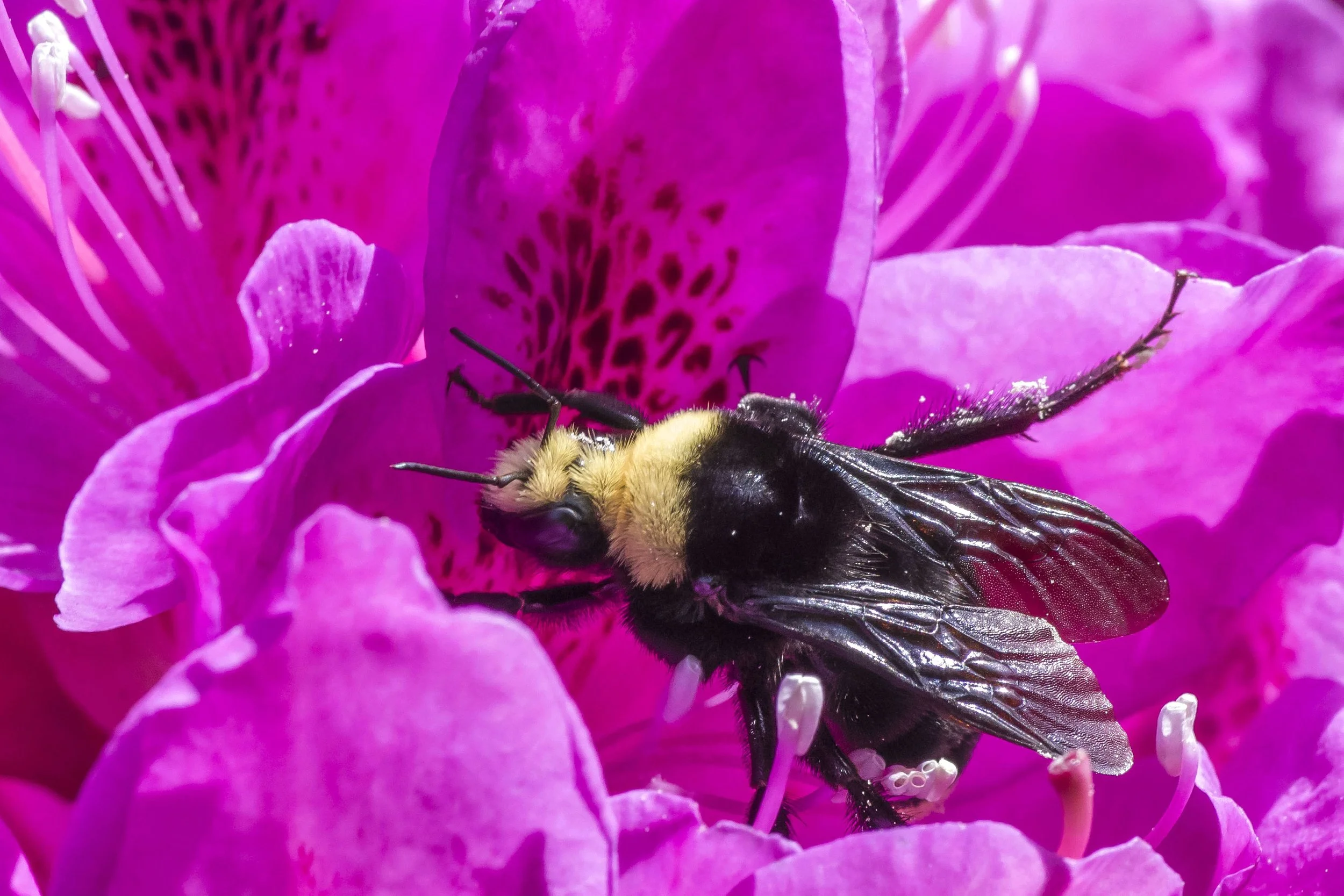
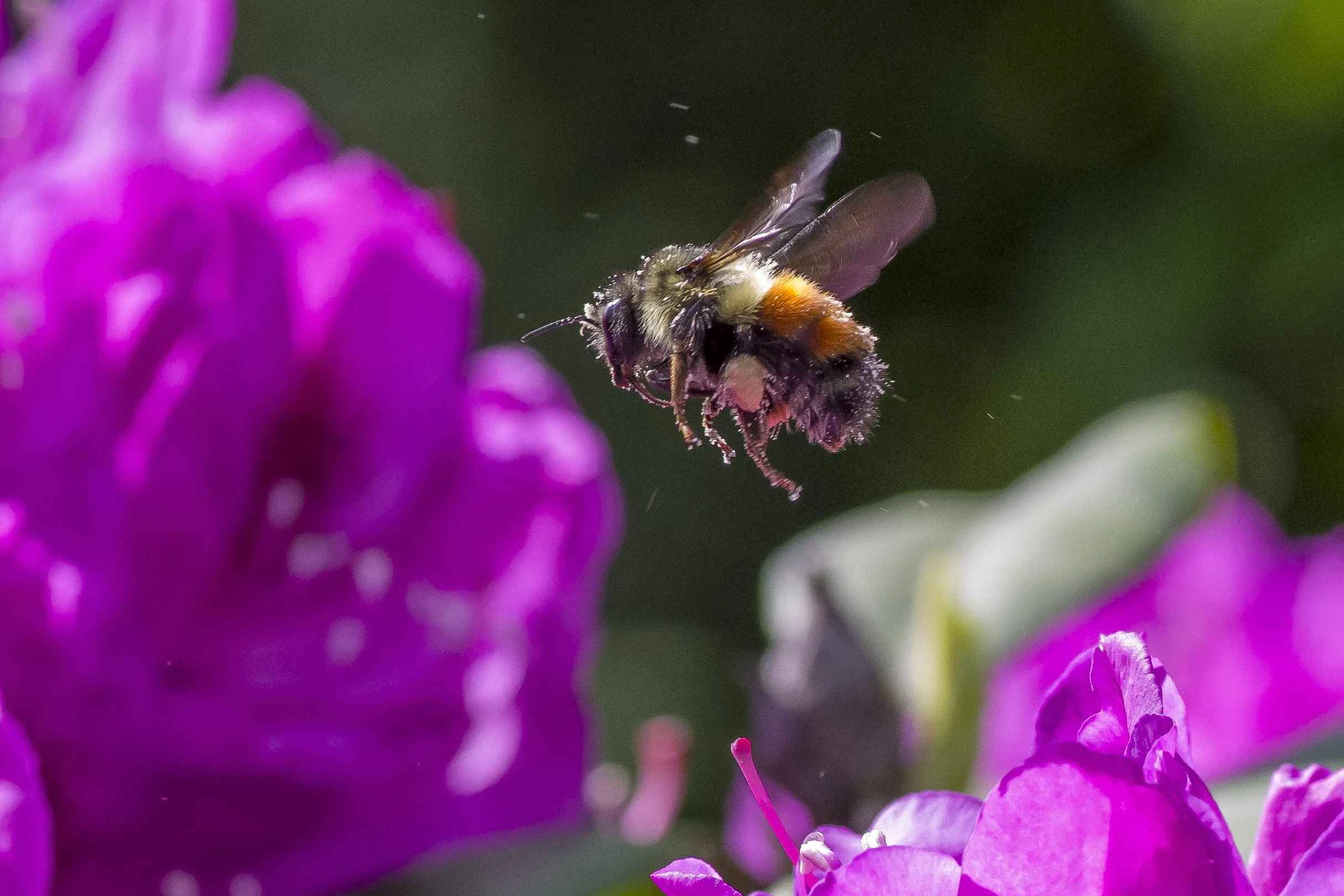
100mm, f/11, 1/500 sec, ISO 1600, direct sunlight.
I waited for the bees to take off and quickly shot before it left focus. Low success rate, but this one worked. Back lit by the sun, detail was brought out by lightening the shadows. I try not to overdo the lightening and keep the image looking natural. 100mm, f6.7, 1/500 sec, ISO 1600, direct sunlight.
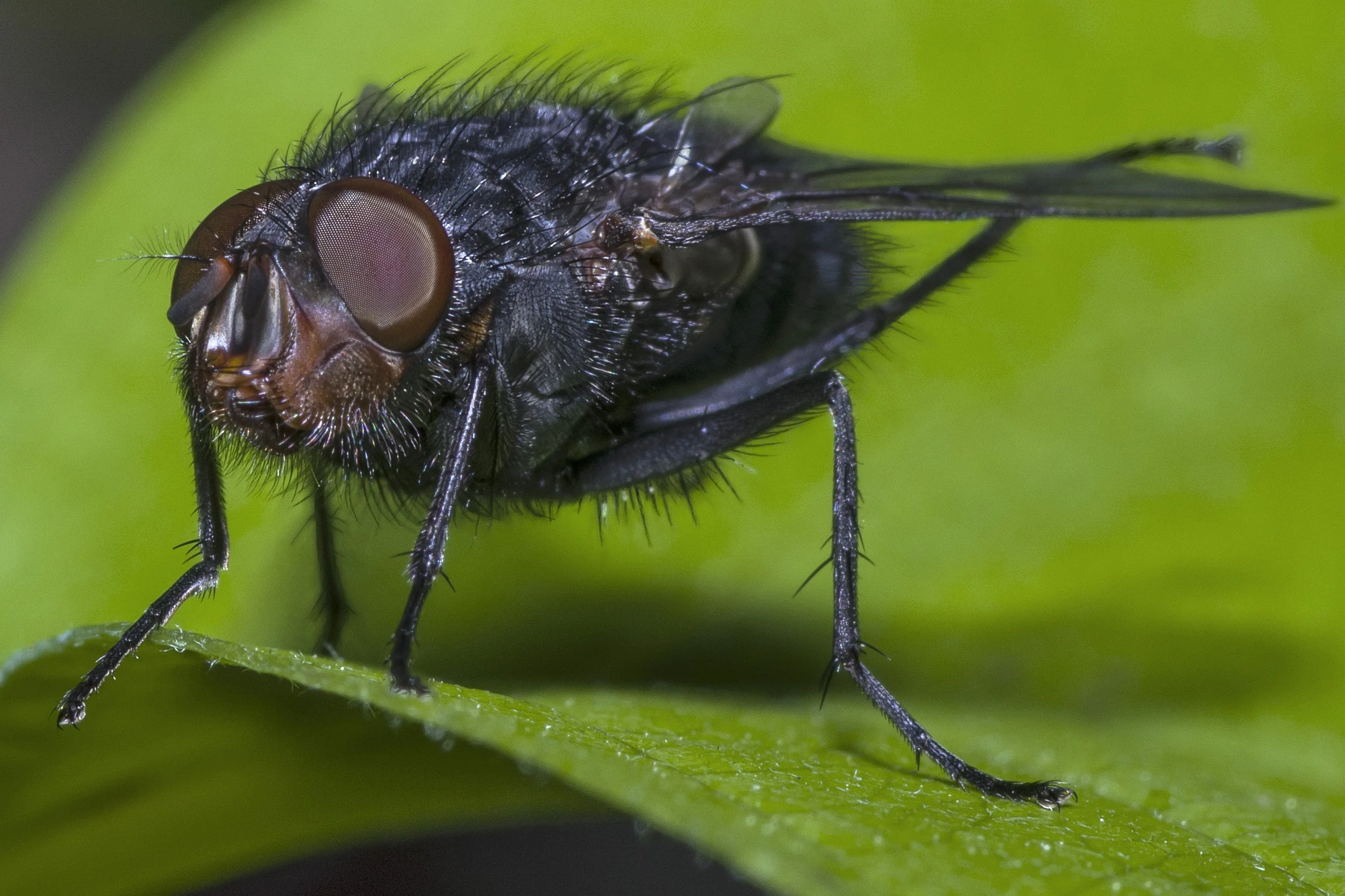
I got some shots of house flies on the rhododendron. I was able to get down at eye level for a more engaging perspective. They would sit still for a couple of seconds. Shoot quick and they are gone. In post, sharpening increased noise and noise reduction decreased sharpness. I had to find a balance between the two. Later I started using a flash, I could lower the ISO for less noise and sharper detail. With more detail I could crop in further to enlarge the image.
100mm, f/13, 1/180 sec, ISO 200, Strobe flash with modifier.
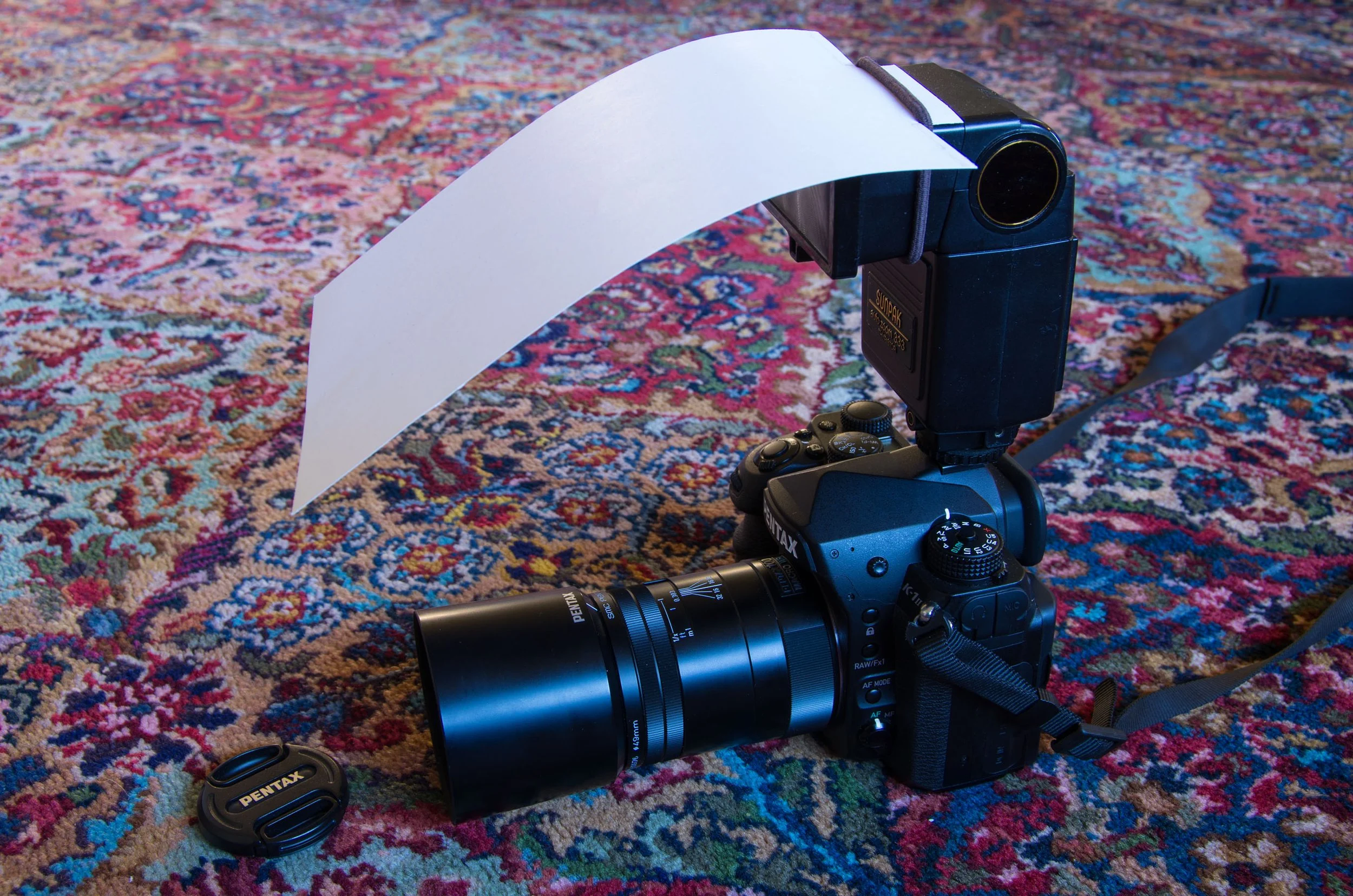
I then found a garden spider and web between my outdoor garbage can and garage wall. It was posing still for me except wind was moving the web. Shady area so I needed more light. I added a strobe flash to the camera hot shoe and strapped white card stock to the top of the flash head to bounce the flash down in front of the lens. The fast strobe flash froze motion blur. Online video examples used extremely defuse light modifiers. I preferred the more directional light I got. It added more dimension and sparkle to the images. The added strobe light allowed low ISO so noise was not an issue.
To focus on the eyes of the spider was challenging; it was on the wrong side of the web and facing down. I had to get into a contorted position, my back on the garbage can lid, shooting straight up behind the web. Set camera to 1/200 flash sync speed, f/13 to increase depth of field to a few millimeters, flash power manually set by trial and error, ¼ power consistently exposed well. Set the lens to minimum focal distance and moved the camera until the image was sharp in the view finder. I had to avoid disturbing the web with the flash modifier.
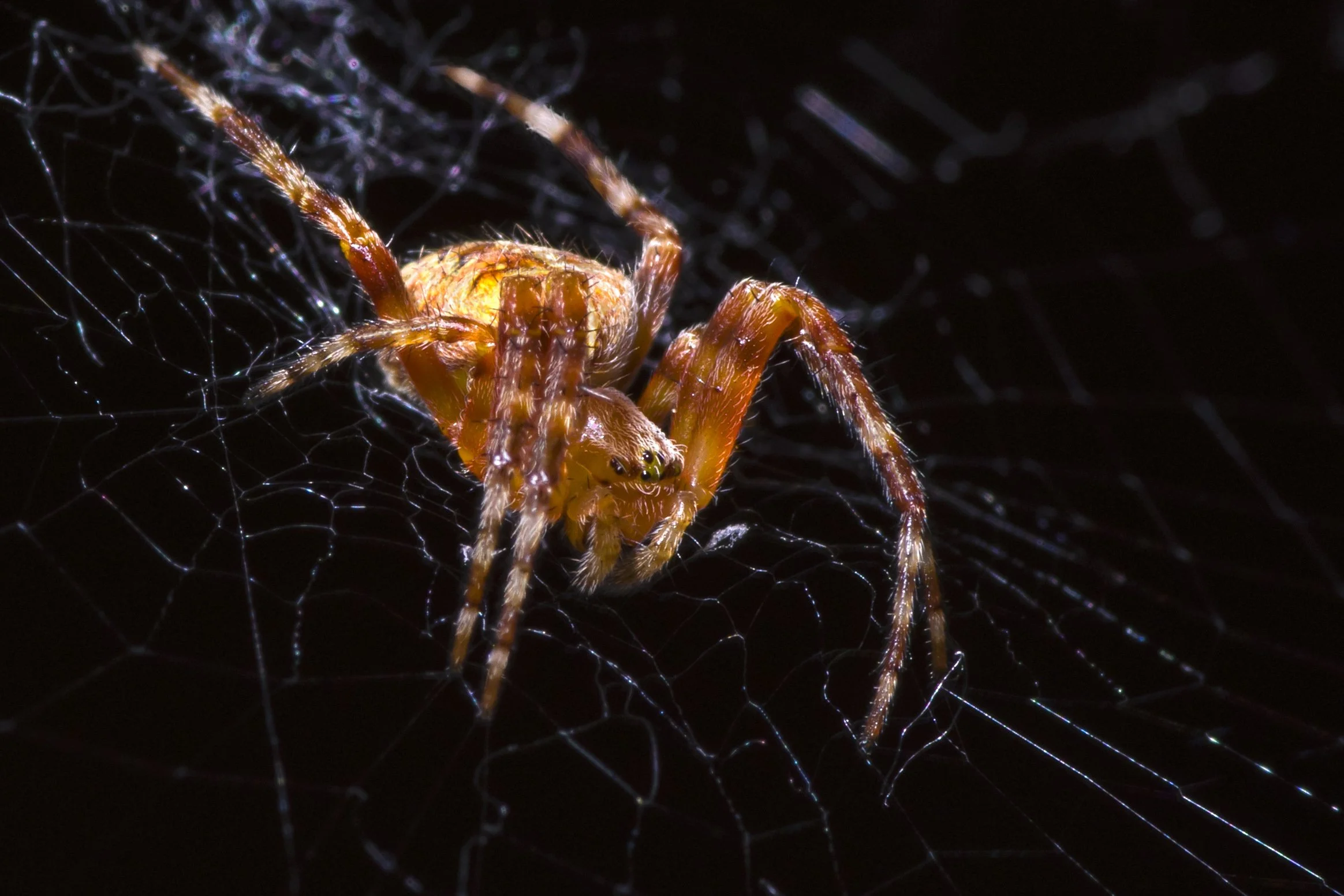
The spider was quite small when I shot this, so cropping was required. This spider is 4 times larger now, a month later. The flash, bounced off cardstock, highlighted the spider and web leaving the distant roof overhang background black. This separated the subject and eliminated clutter. I got the head and eyes sharp, the rest out of focus. For this image, I manually “painted” detail in Photoshop Elements on its forearms which were out of focus. 100mm, f/13, 1/180 sec, ISO 200, strobe flash w/ modifier.
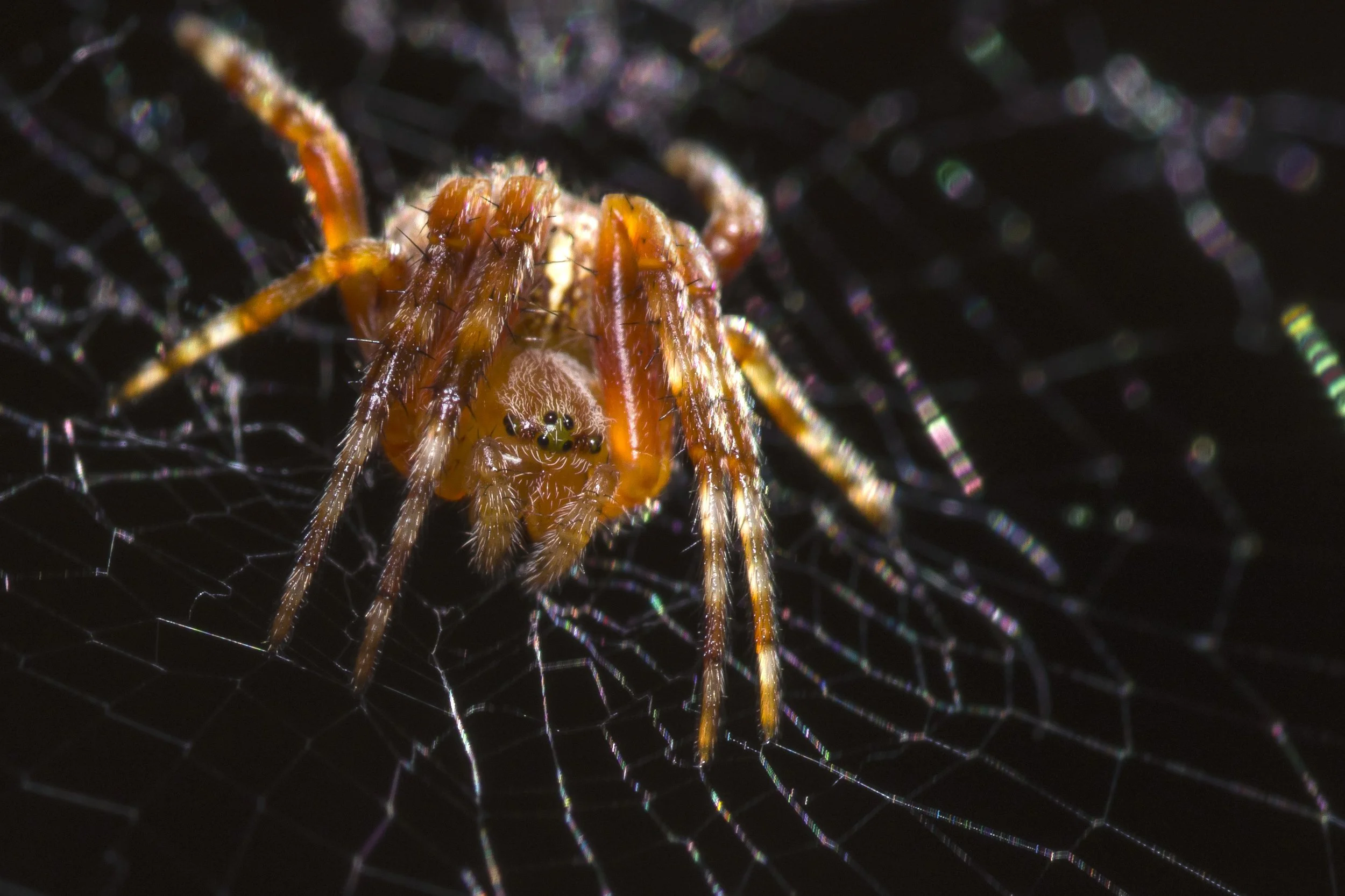
A couple days later I captured this image. The eyes and forearms, equal distance to the camera, are sharply focused. The blurry body is obscured by the in-focus parts. I really like how engaging this image is but fear it would be discounted by the out of focus areas. I feel we can over emphasize technical sharpness. It is easier to judge. I would like to emphasize emotional connection with the viewer. Sometimes softer focus can add emotion or depth.100mm, f/13, 1/180 sec, ISO 200, strobe flash w/ modifier.
Continuing to hone my skills, days later I captured this image which is a composite of 3 images stacked in Photoshop Elements. The main body and face from one image, forearms added from image 2, back legs from image 3. I cropped and rotated the image to this perspective. Focus stacking allowed me to create an image that is almost entirely sharp.
Final image, 100mm, f/13, 1/200 sec, ISO 200, strobe flash with modifier.
I had never taken macro images like this before. I find macro photography to be very challenging and that learning better technique greatly enhances the photos. Taking additional time to do this assignment has greatly advanced my skills in macro photography. There is still more to learn. Each day I practiced my skills got better. The persistent process of shooting, processing, evaluating, and repeating pays off in better images.